
An ongoing consumer refrain at open houses and in grocery store conversations is “Home prices are crashing!” Is that true? Let’s explore some facts about this year’s home prices and the inventory impact, too.
Last year at this time, many housing experts projected home prices were going to crash in 2023. Being disaster oriented, media outlets ran with those forecasts and put out doom and gloom headlines and reports about the 2023 housing market. All of this negative news coverage created a lot of doubts for people about the strength of the residential real estate market. And a lot of people froze in fear of making a move they might have otherwise made.
If it made you question if you should delay your own plans to move, here’s what you really need to know.
Home Prices Never Crashed!
Disregard what you saw in the headlines. The actual data shows home prices were remarkably resilient and performed far better than the media would have you believe (see graph below):

This graph uses reports from three trusted sources to clearly illustrate prices have already rebounded after experiencing only slight declines nationally earlier this year. That’s a far cry from the crash so many articles called for.
The declines that did happen (shown in red), weren’t drastic but were short-lived. As Nicole Friedman, a reporter at the Wall Street Journal (WSJ), says:
“Home prices aren’t falling anymore. . . The surprisingly quick recovery suggests that the residential real-estate downturn is turning out to be shorter and shallower than many housing economists expected . . .”
What happened locally in the Minneapolis-St. Paul area real estate prices?
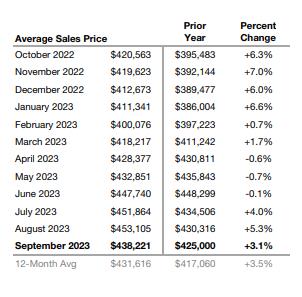
All data comes from Northstar MLS
While nationally, prices fell marginally compared to last year for about 6 months, Minneapolis-St. Paul saw small declines of less than 1% for only 3 months – April, May and June – before rebounding strongly beginning in July… much stronger than national averages!
Even though some media coverage made a big deal about home prices pulling back, the slight correction that happened is already in the rearview mirror. Basically, this data shows you home prices aren’t falling anymore – they’re actually going back up.
So What’s Next for Home Prices?
The consensus from experts is that home price growth (aka, “appreciation”!) will continue in the years ahead and is returning to normal levels for the market. That means we’ll still see home prices appreciating, just at a slower pace than the last few years – and that’s a good thing. And here is what that appreciation has looked like locally going back to 2004 (including the recession and housing crash years):

All data comes from Northstar MLS
Some news sources have seen home price growth slowing and put out stories that make you think prices are falling again. The return of misleading headlines like those is already having an impact on how homebuyers are feeling again. You can see how this affects general opinion in the Consumer Confidence Survey from Fannie Mae (see graph below):

While the percentage of Americans who think prices will fall has been slowly declining this year, the latest Consumer Confidence data indicates that’s ticked back up recently (shown in red). This change is surprising especially since the home price data shows prices are going up, not down. It tells you the impact the media still has on public opinion.
Don’t fall for the negative headlines and become part of this statistic. Remember, data from a number of sources shows home prices aren’t falling anymore. Following a normal seasonality pattern of lower fall and winter prices compared to spring – Yes! Seeing a lower rate of appreciation – Yes! But not crashing real estate values as we saw in 2008-2011!
Another Reason a Real Estate Crash Isn’t Coming? Housing Inventory

You might remember the housing crash in 2008, even if you didn’t own a home at the time. If you’re worried there’s going to be a repeat of what happened back then, there’s good news – the housing market now is markedly different from 2008.
A huge factor is there aren’t enough homes for sale. That means there’s an undersupply, not an oversupply like we saw in 2008-2011. For the market to crash, there would have to be too many houses for sale, but the data doesn’t show that happening.
Housing supply comes from three main sources:
- Homeowners deciding to sell their houses
- Newly built homes
- Distressed properties (foreclosures or short sales)
Here’s a closer look at today’s housing inventory to understand why this isn’t like 2008.
Homeowners Deciding To Sell Their Houses
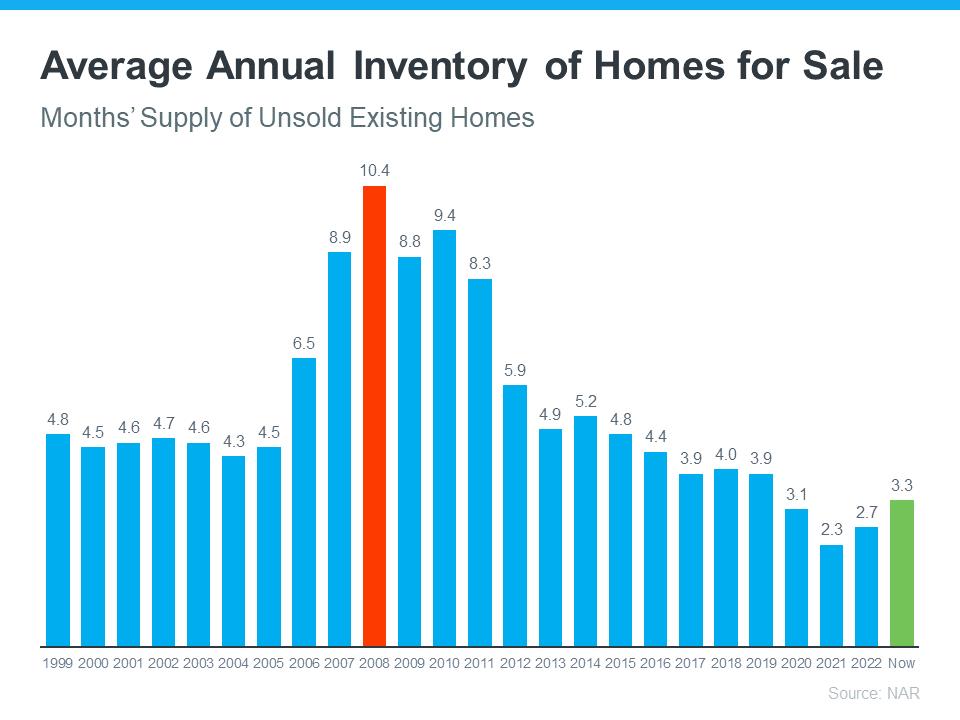
Although housing supply did grow compared to last year, it’s still low. The current months’ supply is below the norm. The graph below shows this more clearly. If you look at the latest data (shown in green), compared to 2008 (shown in red), there’s only about a third of that available inventory today.
How does the Minneapolis-St. Paul market look in comparison?

All data comes from Northstar MLS
So, what does this mean? There just aren’t enough homes available to make home values drop significantly. To have a repeat of 2008, there’d need to be a lot more people selling their houses with very few buyers, and that’s not happening right now.
Newly Built Homes
People are also talking a lot about what’s going on with newly built houses these days, and that might make you wonder if homebuilders are overdoing it. The graph below shows the number of new houses built over the last 52 years:
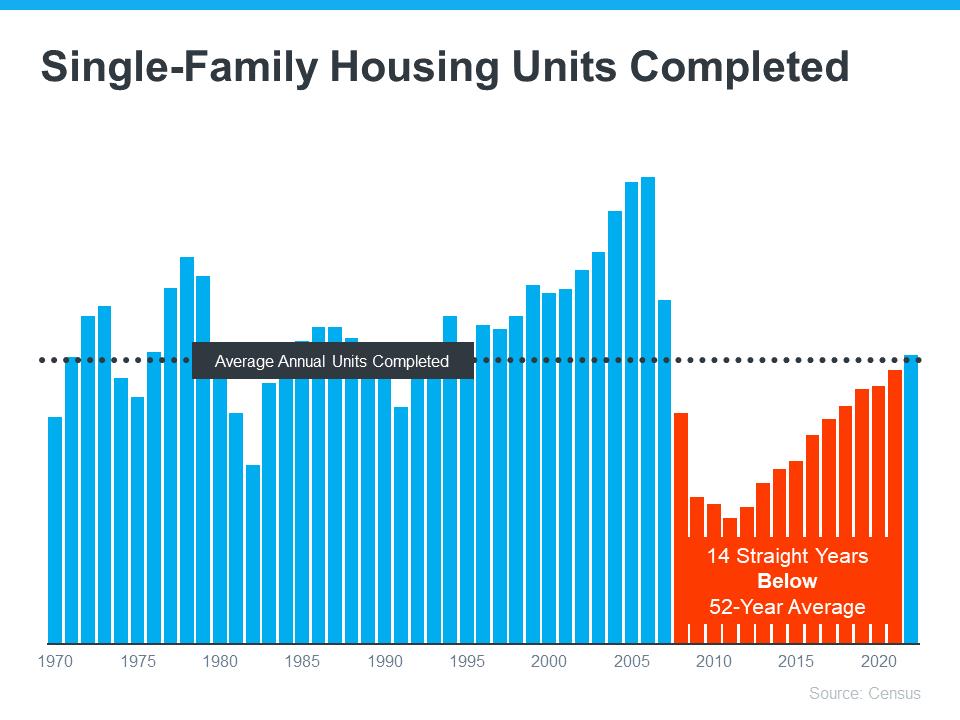
The 14 years of underbuilding (shown in red) is a big part of the reason why inventory is so low today. Basically, builders haven’t been building enough homes for years now and that’s created a significant deficit in supply.
While the final blue bar on the graph shows that’s ramping up and is on pace to hit the long-term average again, it won’t suddenly create an oversupply. That’s because there’s too much of a gap to make up. Plus, builders are being intentional about not overbuilding homes like they did during the bubble.
Distressed Properties (Foreclosures and Short Sales)
The last place inventory can come from is distressed properties, including short sales and foreclosures. Back during the housing crisis, there was a flood of foreclosures due to lending standards that allowed many people to get a home loan they couldn’t truly afford (we called them “liar loans”!).
Today, lending standards are much tighter in comparison, resulting in more qualified buyers and far fewer foreclosures. The graph below uses data from the Federal Reserve to show how things have changed since the housing crash:

This graph illustrates, as lending standards got tighter and buyers were more qualified, the number of foreclosures started to go down. And in 2020 and 2021, during the economic stress of COVID-19, the combination of a moratorium on foreclosures and the forbearance program helped prevent a repeat of the wave of foreclosures we saw back around 2008.
The forbearance program was a game changer, giving homeowners options for things like loan deferrals and modifications they didn’t have before. And data on the success of that program shows four out of every five homeowners coming out of forbearance are either paid in full or have worked out a repayment plan to avoid foreclosure. These are a few of the biggest reasons there won’t be a wave of foreclosures coming to the market.
What This Means for You
Inventory levels aren’t anywhere near where they’d need to be for prices to drop significantly and the housing market to crash. According to Bankrate, that isn’t going to change anytime soon, especially considering buyer demand is still strong:
“This ongoing lack of inventory explains why many buyers still have little choice but to bid up prices. And it also indicates that the supply-and-demand equation simply won’t allow a price crash in the near future.”
Bottom Line
Even though the media may make things sound doom and gloom, the data shows home prices aren’t falling anymore and that the market doesn’t have enough available homes for a repeat of the 2008 housing crisis. So, don’t let the headlines scare you or delay your plans. A housing crash is not on the horizon! If you have questions or concerns about how this market might impact your housing plans and dreams, let’s have a conversation. We can help you to cut through the noise and tell you what’s really happening in our area!
 Real Estate | Your@HomeTeam